Correctional Health

Radar that sees what a camera can't.

Custody cells already have cameras. But a camera can't see through bedding, or read the small, constant movements that show someone is alive. Radar can.

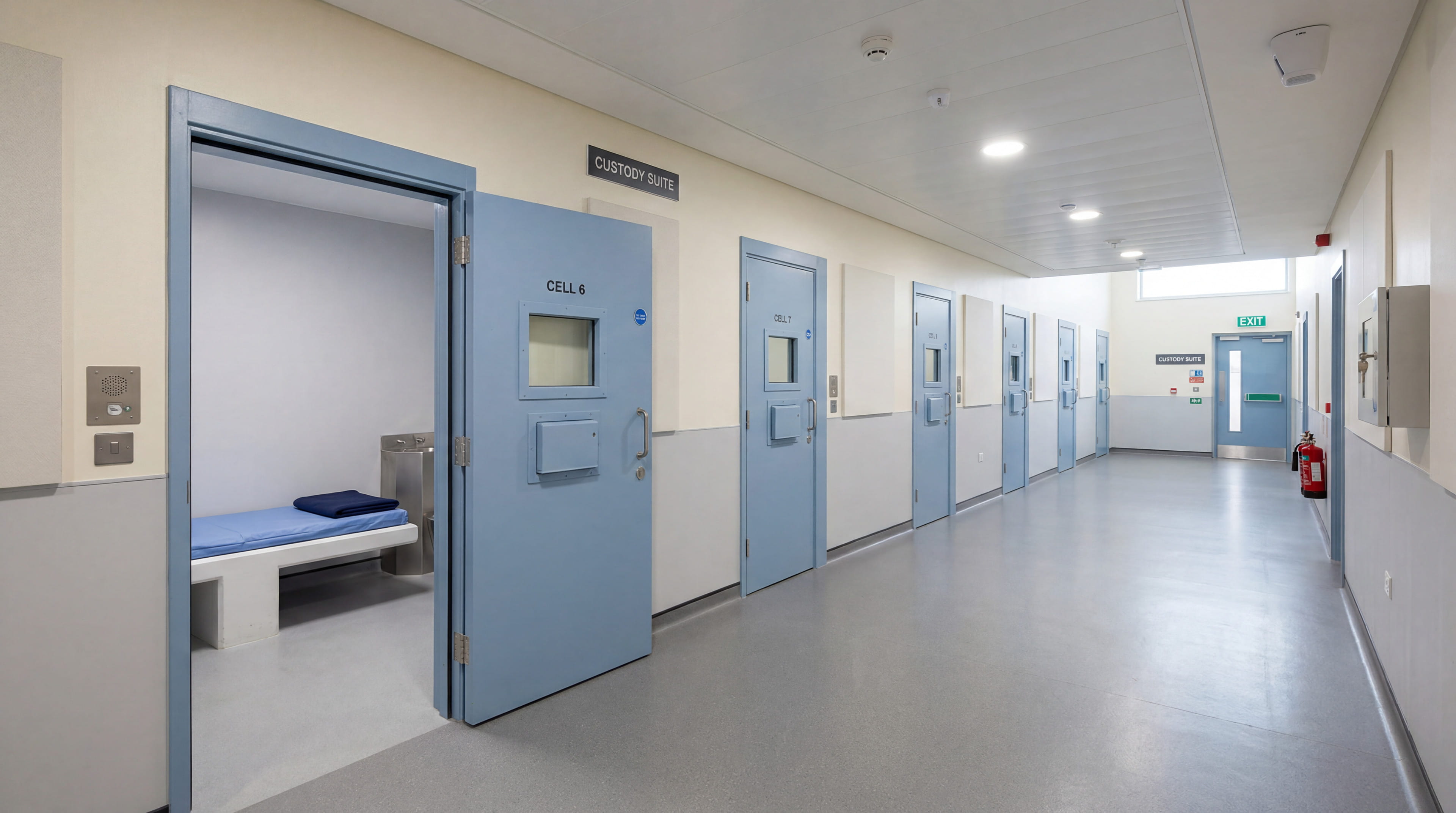
Empty modern British police custody suite with a row of pale blue cell doors along a clean, well-lit corridor, one cell open to show a fixed bench bed.

THE CASE FOR RADAR

What this does in a custody setting.

More frequent observation is often recommended in custody settings, but staffing makes constant checking impossible. Cameras are already present, yet they have their limits. Ultra-wideband radar closes the gaps where a camera falls short, so fewer things go unseen between checks.

  • Sees where a camera can't

    Reads movement across the whole cell through bedding and when a person is turned away or obscured. It senses the small, constant movements that show someone is present and alive, not just a shape on a screen.

  • Stillness and collapse

    Detects a fall, a collapse, or a person who has gone unusually still, and prompts staff to the cell within seconds. It raises the alarm in the moment rather than leaving it to be reviewed afterwards.

  • Works through the night

    Through the night, when a cell is dark and a person is in bed, the sensor keeps working. It reads movement through bedding and in the dark, without lights and without a clear view of the person.

Safety built in

Safe to put in a cell.

Safe in the cell

The sensor sits on the ceiling, powered by a single cable. There is no device at floor or bed level, no exposed wiring, and nothing worn. Nothing a person can pull at, unplug, remove, or use as a ligature point.

No image of anyone

Ultra-wideband radar senses presence, position, and movement without forming an image. No camera image, no microphone, and no biometric data stored, so there is less sensitive data to govern, safeguard, and account for.

Works in real conditions

Radar reads movement through bedding, in the dark, and when a person is turned away or covered. It keeps working in the conditions where a camera in the corner falls short.


For the team on shift

Support for the team on shift.

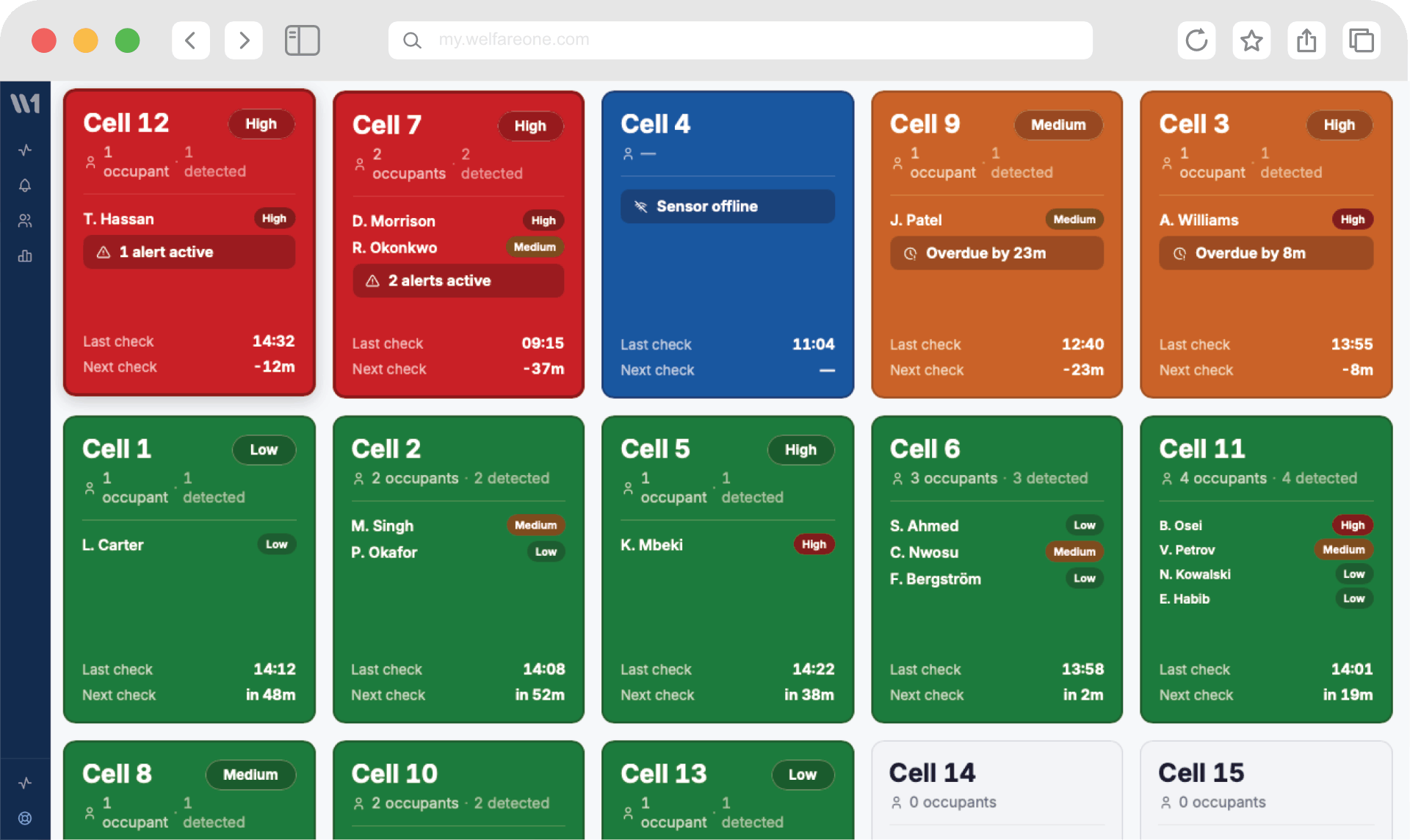
Welfare One gives the custody team continuous awareness between checks. This is what that means in practice in the suite.

Welfare One dashboard showing the live status of every cell in a custody suite, with rooms colour-coded by state and any cell needing attention sorted to the top.
  • An alert the moment a cell needs attention

    A fall, a collapse, or a person who has gone unusually still surfaces as an alert within seconds, so a response can start in the moment rather than at the next check.

  • A record that builds itself

    Every welfare check is logged with a timestamp and the responding officer, and every alert carries an acknowledgement and resolution trail. A clean, defensible record for PPO, IOPC, and coroner scrutiny, with nothing extra to fill in.

  • Fewer things missed between rounds

    Continuous awareness sits alongside the existing observation regime, supporting the checks the team already carries out rather than replacing them.

  • Fits the way the suite already runs

    The platform sits alongside the team's existing workflow and observation routine. It adds awareness without changing how the suite operates.

See Welfare One in action.

Book a short demo and we will walk you through the platform in the context of a custody suite or secure setting.