You can't put a person in every room, every minute. Welfare One provides continuous, contactless awareness of every resident between rounds, through the night, and at every hour your team can't physically be there.
Welfare One is built to support residents and the care teams looking after them. These are just some of the situations where it does the most work.
When rounds happen at intervals because that's what staffing allows, Welfare One holds awareness of every resident in the hours between.
Most falls in care happen between rounds, often unseen. Welfare One detects fall patterns as they happen and alerts the team straight away.
Every check is logged with timestamp and staff identity, producing an auditable compliance record without manual paperwork.
People living with dementia or severe frailty often can't press a call button or wear a device. Welfare One requires nothing of them.
Continuous awareness means fewer rounds purely to confirm a resident is well, and more time for the residents who need it most.
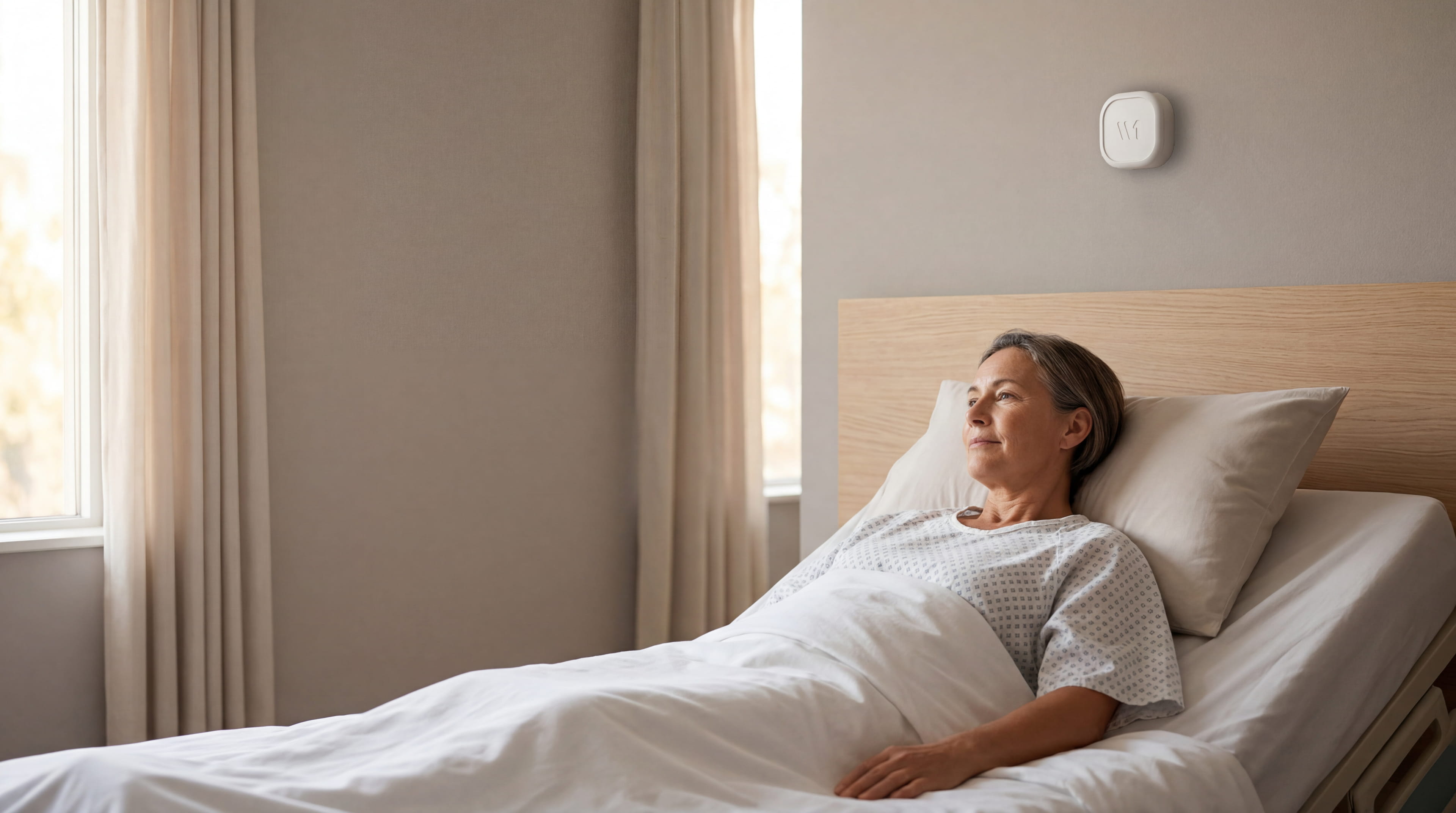
Welfare One senses presence, movement, and position through walls and blankets. No images, no audio, nothing for the resident to wear.
For residents at risk of falls or who wander at night, Welfare One identifies bed exits as they happen and alerts the team for rapid response.
Welfare One tracks recurring patterns of movement and presence over time, surfacing departures from those patterns in plain English.
What changes for residents
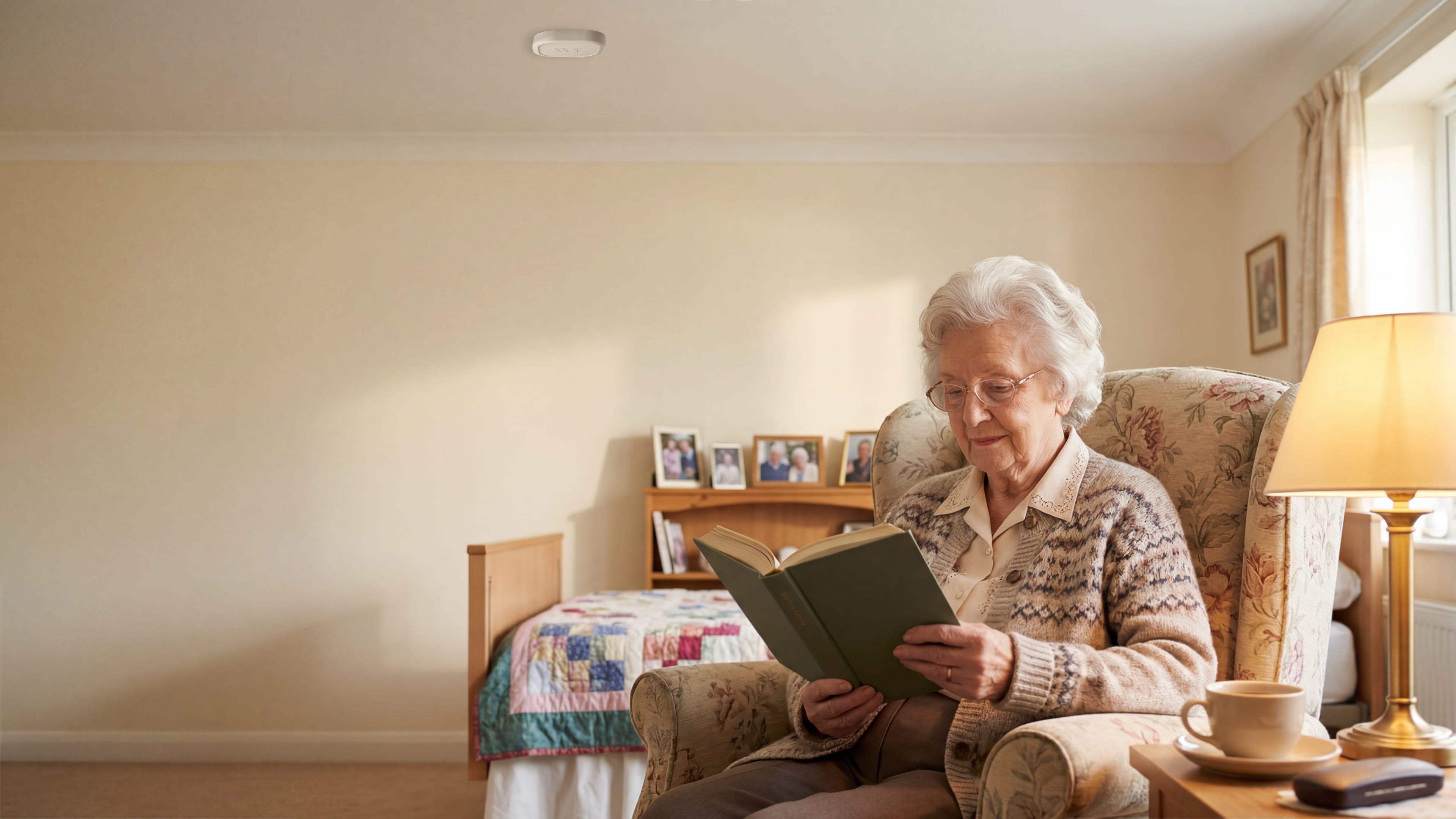
The sensor sits in the ceiling, indistinguishable from a smoke detector. There is nothing for a resident to wear, adjust, or be aware of. The room is unchanged.
Welfare One uses ultra-wideband radar to sense movement and position without capturing any image or recording any sound. Privacy is built in, not a setting to switch off.
The team can confirm a resident is settled without entering the room, switching on a light, or pulling back the bedding. Someone asleep stays warm and undisturbed.
What changes for staff
Continuous awareness between rounds changes the rhythm of the shift. This is what it means in practice for the team on shift.
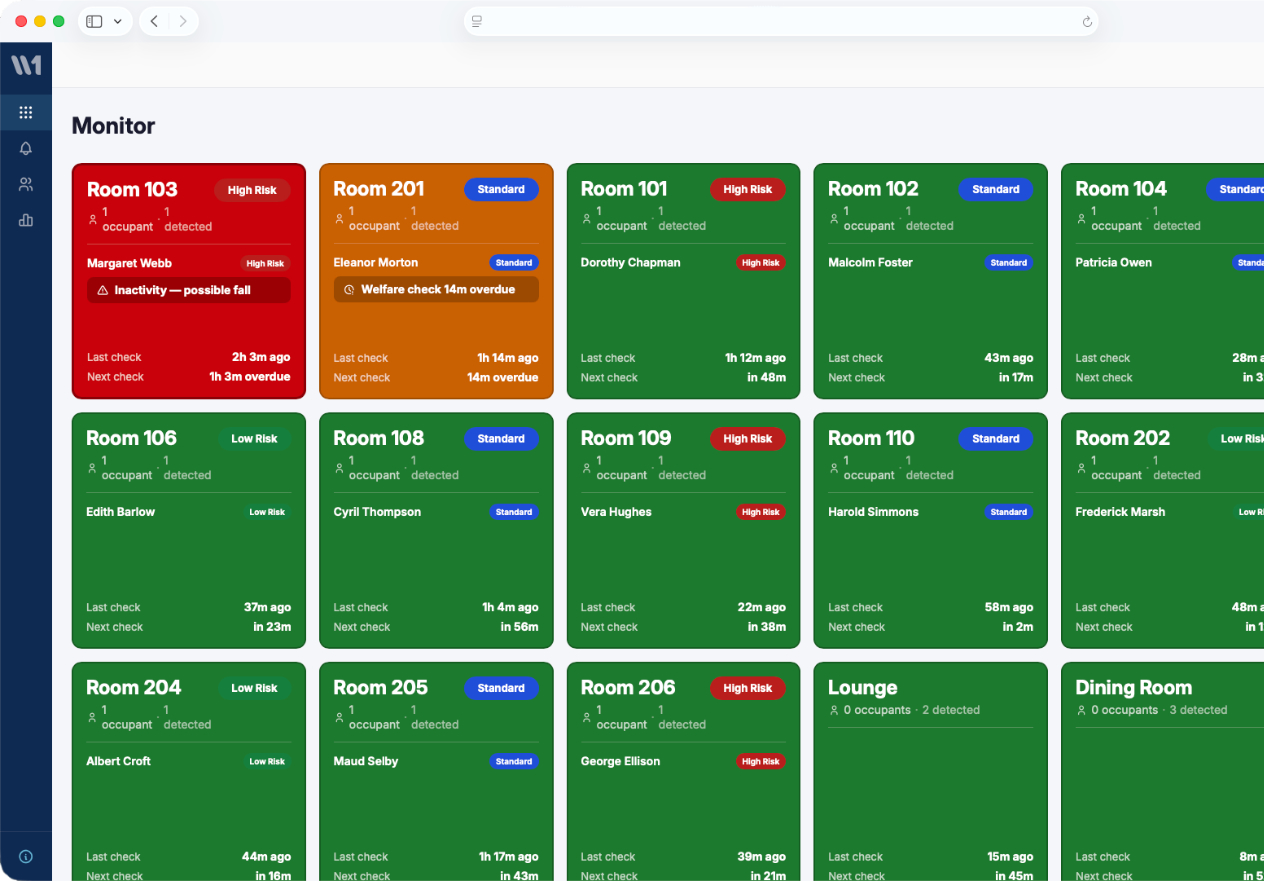
When the dashboard shows settled rooms and no alerts, a round confirms what the team already knows, rather than being the only way to find out.
Every room stays visible between rounds. Prolonged stillness, an unexpected change in position, or a fall surfaces as an alert, often before the next scheduled round would have found it.
Every welfare check is logged automatically against the schedule, with staff identity and timestamp. There is nothing extra to fill in, and nothing to reconstruct after the fact.
An auditable record of welfare check compliance builds as a natural by-product of daily operation. When an inspection comes, the evidence of how your home runs is already there.
How it fits into the home
Welfare One installs with the lightest possible footprint. No structural changes, no specialist contractors, and no rewiring beyond the network point already in the ceiling.
Installation
A single ceiling-mounted sensor, powered and connected by one Power-over-Ethernet cable. Flush to the ceiling, with no mains work and nothing protruding into the room.
Cabling
Standard structured cabling throughout, Cat5e or better, terminated to RJ45. Power and data run over the same cable, so there are no separate power feeds to install and no proprietary cabling to source.
Integration
Where a home needs it, Welfare One can integrate with existing care management systems, configured to the setup already in place. Integration is available as an option rather than a requirement.
Local-first operation
The platform runs on an on-site server and keeps working without an internet connection. A cloud connection adds multi-site visibility, but it is never an operational dependency.